



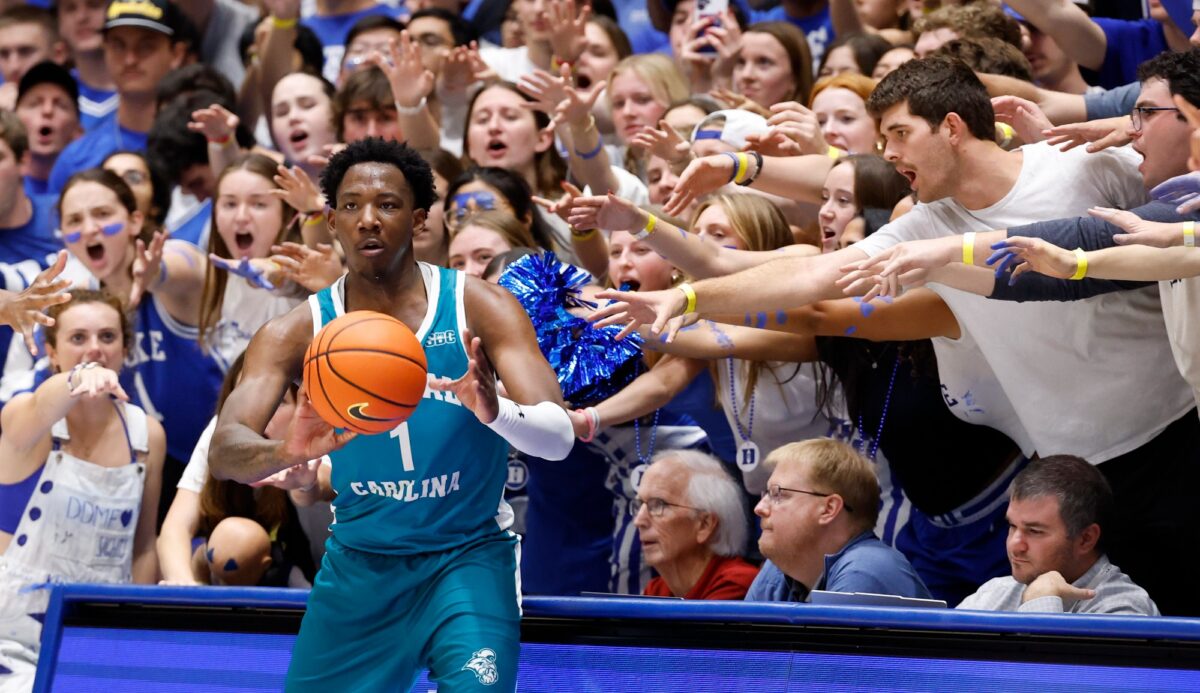
What’s more important to the identity of a college basketball program: the people who write the checks? Or the students who fill the building with passion?
Both matter, of course, and college basketball wouldn’t be what it is without either. Those writing the checks help build and sustain programs, and the students are the ones who bring the energy and passion that make the sport so special.
But there’s a difference between investing in a program and defining its identity. The atmosphere that the students create is something that money can’t buy — and something no athletic department should be willing to give away.
The challenge is finding a balance that respects both without turning the best seats in the building into nothing more than a revenue stream.
Editor's Picks
Here’s what Student Section’s Colin Ward-Henninger, Ethan Cadeaux and Mike Garbett have to say about the topic.
1. Who deserves the best seats in college basketball?
The students who bring the energy? Or the donors who bring the money?
Ethan: The reality is … both. The arena is big enough for all parties to be happy. Courtside seats don’t equal the best seats in college basketball. Courtside seats should be reserved for the donors who bring the money. They’re the ones funding most of the program, after all. But the students should have a close proximity to the court where their noise can impact the game. Whether that’s behind the basket or along the baseline. Most buildings are big enough for donors to have courtside seats and the student section to have a great view as well.
Colin: Definitely agree that there’s room for both parties to be happy, but I’m not sure how realistic that is. Humans are inherently jealous beings, so the donors will complain that the students have better seats, and the students will complain that the donors are ruining the atmosphere. Ultimately if we’re talking about who deserves the best seats, it’s the students. The donors provide funds, but the students also pay tuition, and the basketball team can play a huge part in why they chose that school in the first place. I’d like to think that if I were a multimillionaire, I’d prefer to sit farther away and watch my courtside student section going absolutely crazy.
Mike: The students. Yes, donors play an important role in funding programs and building rosters. But college basketball is about more than money. It’s about atmosphere, passion, school spirit and tradition. Students are the heartbeat of an intimidating home-court advantage. They’re the ones chanting, creating energy and making life difficult for the opposing teams. Donors deserve appreciation. Students deserve the best seats. Donors help pay for the program, but students are the ones who bring it to life.
Reader vote: Who deserves the best seats in college basketball? Cast yours on Student Section.
Reader vote
Who deserves the best seats in college basketball?
You picked . Post it on X
Unofficial reader vote. One vote per browser.
2. Where should the student section sit?
How much does a student section’s location actually matter?
Ethan: A ton. Way more in college basketball than college football. I’m a Maryland alum, and our student section was nicknamed “The Wall” because of its upright build behind the basket. Students would camp out for hours to get the best seats. I’d like to think that we made an impact, and the location played a large role in that. I don’t think it would have been nearly as impactful if it was in a different location. Being close to the action, where the noise can make a difference, is a crucial factor.
Mike: A lot. The closer students are to the court, the more their energy can impact a game. They’re louder and more engaged and create an unnerving environment for the opposition. Remember, there’s a reason home-court advantage matters. Students who are close to the action can influence momentum, energize players and make opponents uncomfortable. If you want an electric atmosphere, put the students where they make the biggest difference.
Colin: I always think of those photos of visiting players trying to inbound the ball with the Cameron Crazies just inches behind them pointing and screaming at the top of their lungs. Now that is a home-court advantage. You just can’t replicate that if your student section is 15 rows from the floor. That being said, I’m not sure if the location matters as long as it’s near the court. Like Ethan said, behind the basket is a great spot, but so is somewhere along the sidelines. Students will find a way to be heard, but they need to be close enough to make a difference.
3. Premium seats or home-court advantage?
Are athletic departments sacrificing home-court advantage for a bigger paycheck?
Ethan: Some are, some aren’t. Some of the best environments in college basketball — Cameron Indoor Stadium, Allen Fieldhouse, etc. — have their students up close. Moving them farther back would potentially take away from the deafening environments these fan bases have created for years and years. Like I said earlier, though, I think there’s enough room for both. Hardly any arena has its entire lower bowl filled with students. There’s a happy medium where both donors and students can have good seats. Schools just have to find it.
Mike: There’s a legitimate argument that some are doing just that. Athletic departments have every right to generate as much revenue as possible, and courtside seats can bring in significant money from donors and season-ticket holders. But there’s a trade-off. When you move students away from the court, you’re potentially taking away some of the energy that makes college basketball special. It’s up to the schools to decide what’s more valuable to them. Is it premium seating dollars? Or a true home-court advantage?
Colin: I covered the Golden State Warriors for years, and this question reminds me of when the team moved from Oracle Arena in Oakland to Chase Center in San Francisco. Sacrifices were clearly made going from one of the most frenzied, loudest arenas in the league to a more corporate, luxury-box-heavy atmosphere. Athletic departments are doing the same thing, and they can’t ignore the trade-off. Moving students farther from the action has inevitable negative effects on your home-court advantage, but there’s also a way — like they did with Chase Center — to create a great atmosphere. It will just always be different from what it would be with courtside students.
4. Who gets the balance right?
Which college basketball program gets the balance between students, donors and atmosphere right? And which gets it completely wrong?
Mike: If any program understands the importance of student involvement and creating an electric atmosphere, it’s Duke. Put Kansas, Michigan State and Purdue up there, too. Two of the biggest blue-blood programs, Kentucky and North Carolina, frequently draw criticism for prioritizing wealthy donors at the expense of student energy in arenas that seat over 20,000. It’s not about eliminating donor seating. It’s about finding the right balance. Donors deserve recognition, but students need to be a big part of the atmosphere, not an afterthought.
Ethan: I agree with Mike: As much as it pains me to say, Duke is the prime example of understanding the balance between students, donors and atmosphere. The Cameron Crazies are legit. It’s one of the toughest buildings to play in on an annual basis — unless you’re Illinois. Other programs that deserve credit are Purdue, Kansas, Michigan State, Iowa State and Indiana. I’ll throw my alma mater in there too: Xfinity Center is an elite college basketball venue when Maryland is rolling. Those who get it wrong? Villanova, Georgetown and the schools that play in NBA arenas instead of their on-campus gyms. Yes, I know the on-campus buildings are too small, but the NBA arenas are way, way, way too big and lack any resemblance to a college atmosphere.
Colin: Mike and Ethan are right about Duke, and it’s pretty much impossible to disagree. I’d also point out Indiana, which invested in its atmosphere by nearly doubling the number of court-level seats set aside for Indiana students this season. In terms of who gets it wrong, Ethan makes a great point about the NBA arenas destroying the atmosphere. Wichita State also comes to mind since it added premium seats that displaced the cheerleaders and dancers from the floor level.
5. What’s the ideal courtside setup for college basketball?
Should students surround the floor? Should donors get the premium seats? Or is there a compromise that keeps the atmosphere and the athletic department’s bank account healthy?
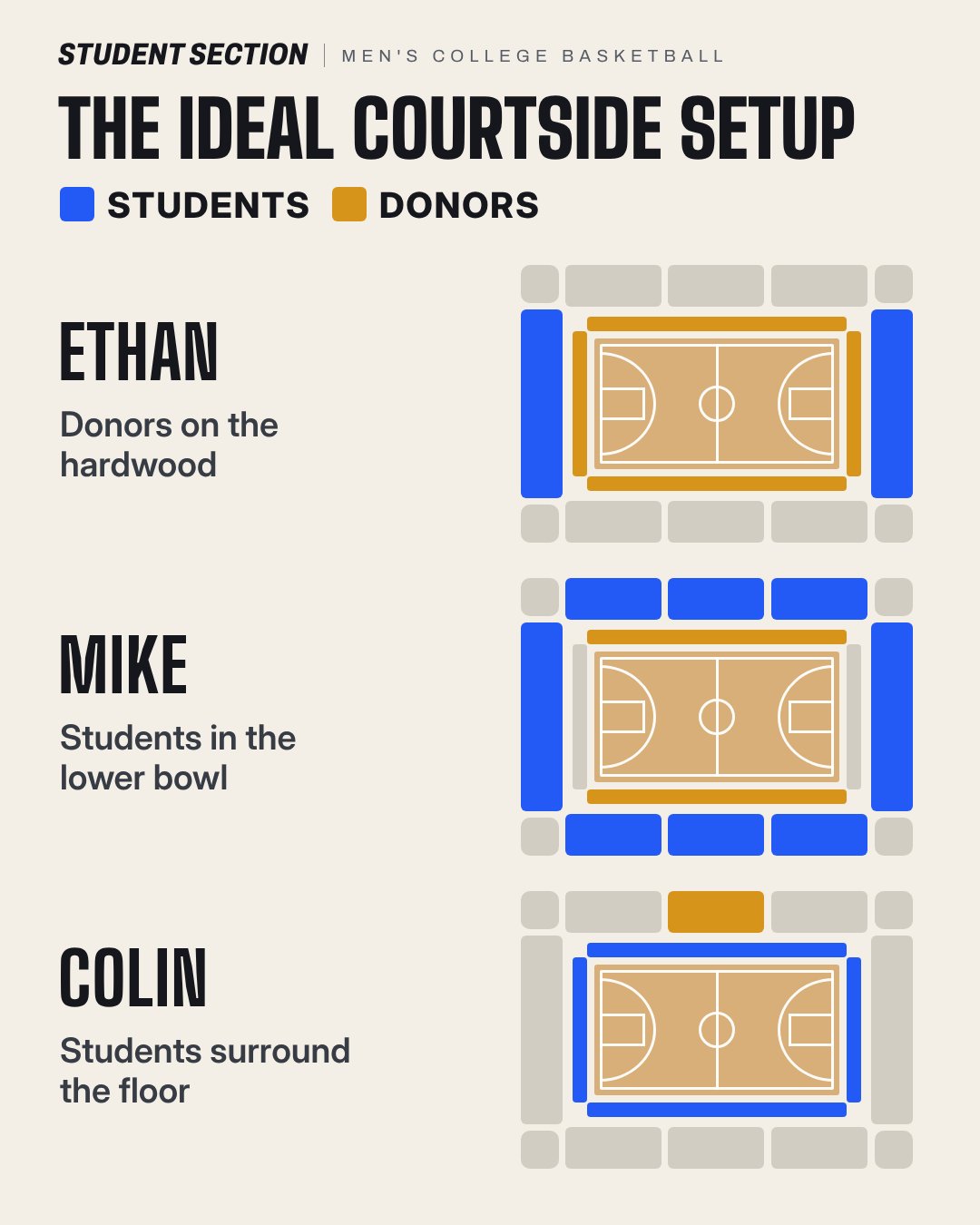
Ethan: Donors and famous alumni should get the seats on the hardwood and premium seats, but the student section(s) should be in the lower bowl and as close to the floor as possible. There’s no reason for students to ever have their feet on the wood, but they should be close enough where their noise can significantly impact the game. Behind the baskets and the lower-bowl sections along the baseline behind the courtside seats are the best places for student sections to be.
Mike: OK, let’s compromise. Programs need money. Donors deserve to be recognized for the support they provide. But students shouldn’t pay the price by being pushed away from the action. Keep some premium courtside seats available for donors, while also reserving prime lower-bowl sections along the sidelines and baselines for students. Give donors great seats and experiences, but also protect a large, loud student section close to the court. You can sell great seats, but you can’t buy school spirit.
Colin: Can we ask a question here? Why do rich people have to sit on the floor? Honestly, courtside seats aren’t the best way to watch basketball anyway. Let’s surround the floor with students who can legitimately affect the game, then create a special section slightly higher up for donors and famous alumni with comfy chairs and dedicated wait staff. The section can receive special recognition every game, showing all the donors on the Jumbotron. Seems like a solid compromise to me.
Every campus. Every tradition. Every fan. Sign up for the Student Section Newsletter
More Group Chat discussions
Arkansas field storm cost $500,000. Is it worth it?
Kamario Taylor, $7.5-million NIL deals and the future of college football
Will the 24-team playoff expansion save or ruin college football?
Mike Garbett is a content specialist working with McClatchy’s Content Innovation Lab.