
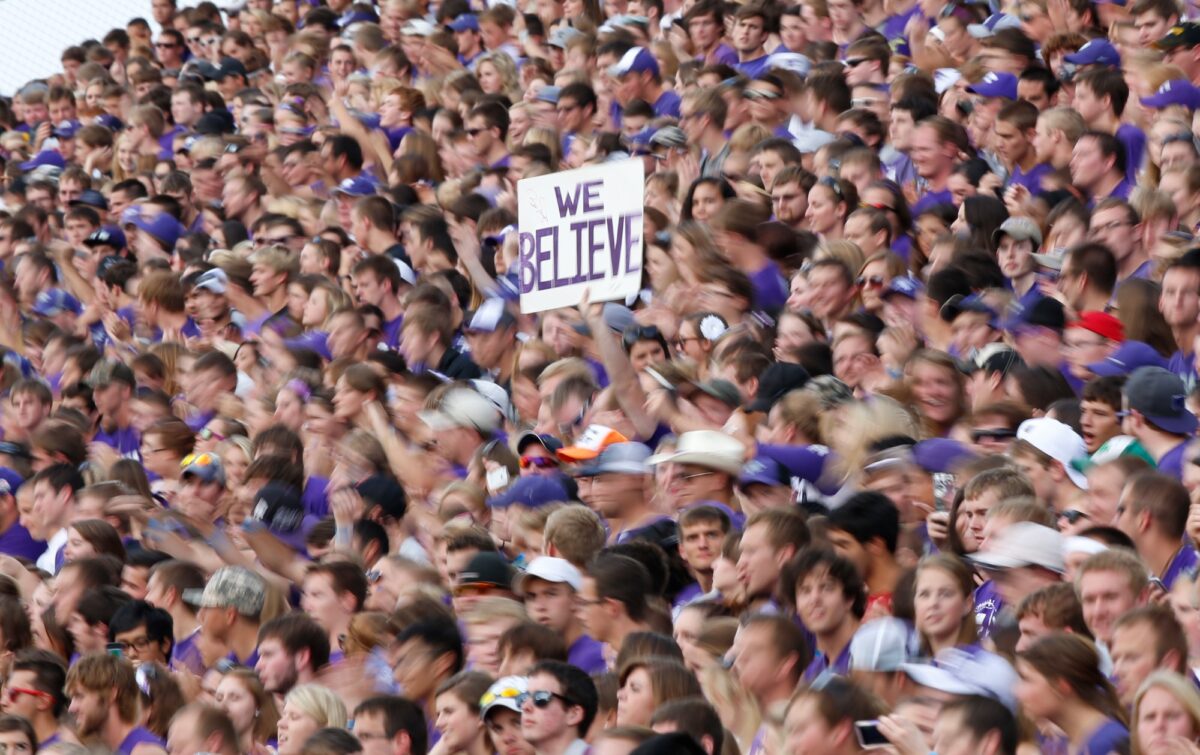
Kansas State’s “Wabash Cannonball” story starts with a fire, a basketball game and a surviving piece of sheet music.
What happened next turned a song with no connection to the Wildcats into one of the most recognizable traditions in college football.
The song itself was a folk ballad about a mythical train and the hobos who rode the rails.
It had nothing to do with Manhattan, Kansas.
Then a 1968 fire changed that.
Three nights after arsonists set fire to Nichols Hall, home to K-State’s music department, the band had a basketball game to play. Almost all of its sheet music was gone.
Except for one piece: “Wabash Cannonball.”
K-State band director Phil Hewett had taken a copy home from the library to work on the arrangement. That made it the only piece of sheet music to survive the fire.
On Dec. 16, 1968, the band took that surviving arrangement to Ahearn Fieldhouse.
It played “Wabash Cannonball.” Then played it again. And again …
And K-State fans loved it.
The song’s backstory
Long before it became a tradition at Bill Snyder Family Stadium, “Wabash Cannonball” was a popular American folk song.
K-State describes “Wabash Cannonball” as a 1933 folk ballad saluting the nation’s rail-riding hobos. But the song has older roots, with an early published version dating to 1905. Roy Acuff’s 1936 recording helped make it a country standard.
But none of that had anything to do with the university.
Then, on Dec. 13, 1968 — a Friday, no less — the fire destroyed Nichols Hall as well as the music department’s instruments, equipment and sheet music.
Almost the entire collection was gone. Except for the “Wabash Cannonball” arrangement Hewett had taken home.
Three days later, the band had a home basketball game at Ahearn Fieldhouse.
With borrowed instruments and a skeleton crew of musicians, the band played the only piece of music it had left: “Wabash Cannonball.”
K-State Athletics says the song became a second fight song because the band played it “loud and often.”
Nobody sat down and decided K-State needed another fight song. A fire destroyed the music department, one arrangement happened to survive, 14 musicians played it at a basketball game three days later — and the crowd loved it.
The tradition wasn’t invented. It just happened.
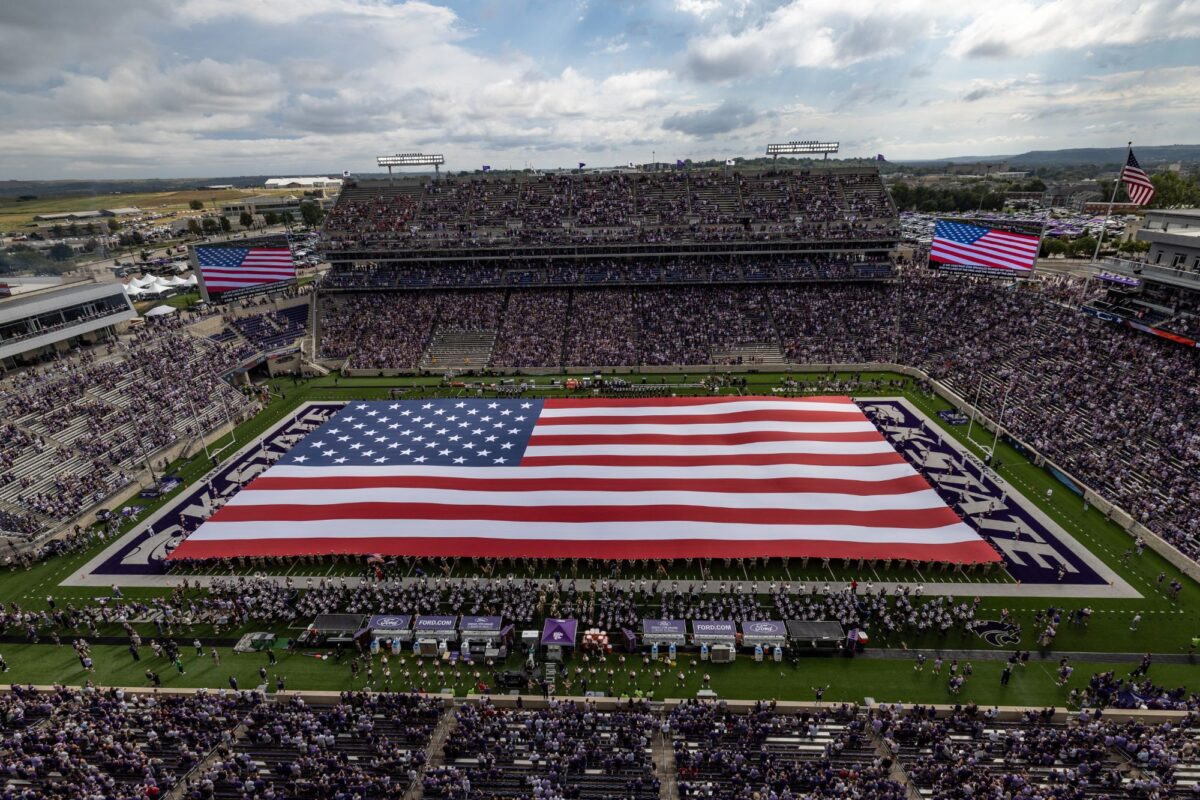
From one surviving song to a K-State tradition
“Wabash Cannonball” kept coming back, and over time, it became part of the soundtrack of K-State athletics.
Eventually, fans added something to it. When the band plays the song, the crowd doesn’t just listen. It does the Wabash.
Fans rise, sway, clap and move together with the music.
K-State describes fans jumping to their feet at the opening notes and moving in synchronized motions. The K-State Alumni Association similarly describes the crowd dancing and rocking along with the band.
That’s what turned a song into a ritual.
A tradition through coincidence
Here’s the funny part: K-State already had a fight song.
“Wildcat Victory,” written in 1927 by Harry E. Erickson, is the school’s official fight song.
But “Wabash Cannonball” became something different. It became the song where the entire stadium gets involved.
When the band plays it, the fans move with it.
And generations of K-Staters learn the same routine.
K-State Athletics now calls “Wabash” a second fight song, while the university describes it as one of the school’s defining traditions.
In 2016, ESPN ranked “Wabash Cannonball” the No. 1 pregame tradition in the Big 12, highlighting the combination of the song and the coordinated student-section response.
That’s quite a journey for a piece of sheet music that survived a fire by coincidence.
Quotes of note
“I played in the K-State marching band, and it always gave me chills when we played ‘Wabash Cannonball.’ … I loved the roar of the crowd, the feel of the field beneath my feet and the echo of each note as it bounced off our beautiful football stadium.” – Sierra Meusburger Scott, K-State Class of 1986, reflecting on her experience as a band member
“You know, I’ve heard a few renditions of the Cannonball at other schools and it just doesn’t have the same sound. I don’t know what it is about the way our band at K-State plays that song, but it just has a special something that other bands don’t quite get.” – Kent Brown, former K-State sports information director
“When the band walks in 40 minutes before kickoff and starts playing its songs, that energizes the crowd. The band plays the entire game with the fight song and Wabash.” – former K-State wide receiver Curry Sexton
READ MORE: Kansas State football traditions that help bring Manhattan to life
READ MORE: The top 25 college football traditions that make Saturdays special
READ MORE: From chants to customs: Every Big 12 school’s most iconic football traditions
Mike Garbett is a content specialist working with McClatchy’s Content Innovation Lab.