




Larry Pietrangelo tattooed an “M” on his bald head for a chance to win tickets to a Michigan-Ohio State game. He didn’t even get them. Bob Baker attended 500 consecutive Maryland football games — home and away. Over a hundred Alabama students braved frigid overnight temperatures while camping out to secure tickets to the Iron Bowl.
If you think devotees like these will be dissuaded by a 24-team playoff, you simply don’t know college football fans.
On Monday, the College Football Playoff Management Committee (talk about a name that screams bureaucracy) announced its inevitable expansion to 24 teams, soundtracked by a resounding chorus of the latest version of, “This will ruin college football,” conducted by everyone from students, to talking heads, to college coaches. Even CFP executive director Rich Clark admitted that fans aren’t exactly salivating at the idea.
“We’re aware of the fan sentiment and that many fans aren’t in favor of expansion,” Clark said during Monday’s media teleconference. “It was considered.”
Editor's Picks
You know what else probably received slight consideration? The reported $1.7 billion contract between the CFP and ESPN. The motivation for this change is financial. Cold hard cash. Let’s not maintain any illusions that this is about anything else.
More playoff games, more chances for fans
But that doesn’t mean a 24-team playoff can’t actually benefit college football fans.
Twelve additional programs will get to witness playoff football each year. The number of CFP games played on college campuses will quadruple to 16. The additional seeds mean that fans of three-, four- and even five-loss teams can maintain hope for a national title instead of turning their attention to preseason basketball in late October.
It’s simple sports math: More games + higher stakes = better fan experience.
Yes, the counterargument has been made loud and clear: Emphasis on and expansion of the playoff devalues the regular season, and the elimination of Power Four conference championship games fractures a crucial, beloved tradition.
Absolutely fair, but think about this from a fan perspective. Do you think the guy with a Michigan tattoo on his head only wanted to go to that game because the Wolverines had a shot at a conference championship? He would show up and cheer just as loudly if the game didn’t even count.
The crowds are already proving the point
On college campuses, fans support the team because it’s in their blood.
Texas A&M is 4-5 this season, and they’ve drawn over 106,000 fans per game. Three-win Arkansas has averaged nearly 70,000 and 2-7 Georgia Tech is filling over 94% of its stadium.
Those games don’t all matter, but they matter.
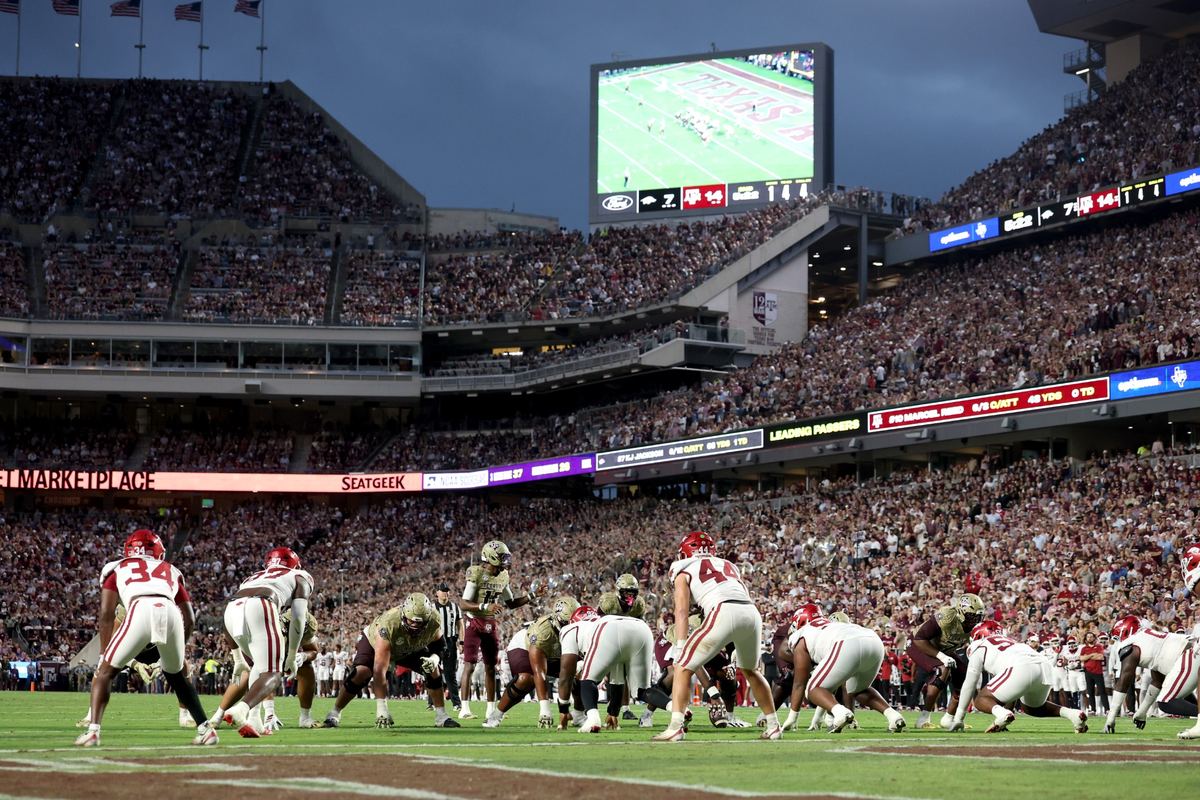
Recently, fans have endured name, image and likeness chaos, transfer-portal mania and a mercurial playoff structure. The latest shift to a 24-team format can surely be seen as another hurdle. But it can also be seen as a stepladder to elevate college football culture.
Change the format, not the fandom
Traditionalists generally oppose change, and that’s fine. But take a look around. The NFL added a 17th game and expanded the playoffs. The NBA started a midseason tournament and implemented extreme salary-cap restrictions in an attempt to even the playing field. Major League Baseball expanded its Wild Card round and added ABS challenges. Even the once-sacred 64-team March Madness bracket is set to expand to 76 teams in 2027.
Change is here, whether or not you choose to embrace it, and fandom carries on. Eliminating Power Four conference championship games takes away a crucial part of college football as we know it, but one could argue that it adds value to regular-season matchups. If conference champions are determined by standings and tiebreakers, as expected, that early-October road game suddenly becomes essential.
Take England’s Premier League, for example. There’s no championship game or postseason playoff to determine its winner. Whoever finishes atop the standings after the regular season is the champion. And no human on this earth can argue that format has negatively affected some of the most rabid fans in sports.
What expansion still cannot replace
There are understandable concerns with the new CFP format, including player safety, travel costs for fans and academic disruption. Nobody is saying this is perfect. But nothing will be.
Under the 24-team format, college football fans will still get rivalry games and all the traditions that are the lifeblood of the sport. But now, even more teams will get a shot at the ultimate prize, and at the very least a chance to don school colors in a win-or-go-home playoff atmosphere against a potentially new, dreaded foe.
While there is plenty to nitpick about the 24-team playoff format, the juggernaut of college fandom — the only part of this that truly matters — will continue to find new and exciting ways to thrive.