



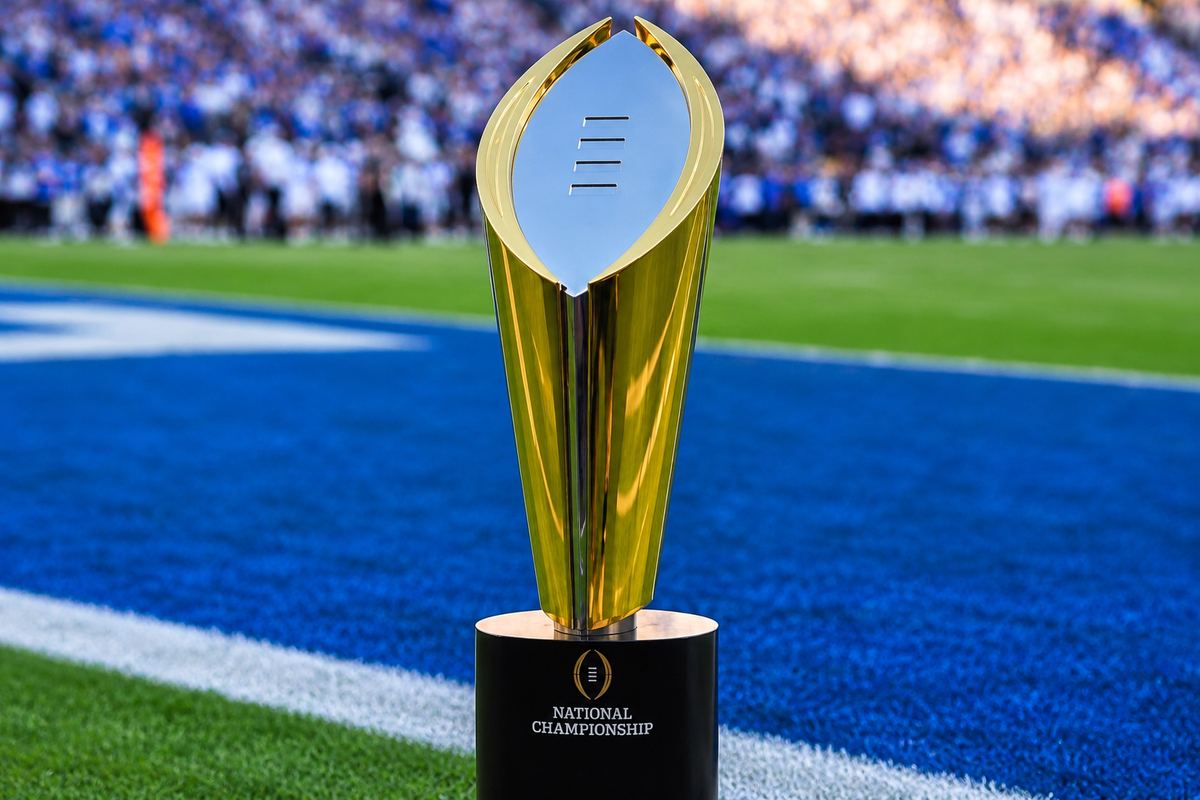
It’s early November and the smell of the College Football Playoff is in the air. With the committee releasing its first set of rankings for the 2026 season on Tuesday, debate is swirling like the Santa Ana winds as fans try to make sense of how and why the committee came to these decisions.
First, the basics. Twelve teams will make the final playoff bracket (though not necessarily the top 12 ranked teams … we’ll get into that later), with the winner of the single-elimination tournament being crowned national champion. The top four teams receive first-round byes, with seeds 5-12 playing at the higher seed’s home stadium in the first round.
The final set of rankings will be released Sunday, Dec. 6.
Since you probably have questions (don’t we all), here is a handy guide to the initial CFP rankings.
Editor's Picks
What to know
What does the CFP Top 25 look like?
College Football Playoff Rankings
First rankings · November 3, 2026 · Top 25
| Rank | Team | Record | Status |
|---|---|---|---|
| 1 | Miami | 8-0 | ★ BYE |
| 2 | Georgia | 7-1 | ★ BYE |
| 3 | Utah | 8-0 | ★ BYE |
| 4 | Indiana | 8-1 | ★ BYE |
| 5 | Alabama | 6-2 | IN |
| 6 | Kentucky | 7-1 | IN |
| 7 | Texas | 6-2 | IN |
| 8 | UCLA | 8-0 | IN |
| 9 | BYU | 7-1 | IN |
| 10 | Ole Miss | 6-2 | IN |
| 11 | Notre Dame | 7-1 | IN |
| 12 | Ohio State | 6-2 | OUT |
| 13 | Tennessee | 6-2 | OUT |
| 14 | LSU | 6-2 | OUT |
| 15 | Texas Tech | 7-1 | OUT |
| 16 | Wake Forest | 7-1 | OUT |
| 17 | Houston | 6-2 | OUT |
| 18 | Missouri | 6-2 | OUT |
| 19 | Iowa | 6-2 | OUT |
| 20 | USC | 7-2 | OUT |
| 21 | South Carolina | 5-3 | OUT |
| 22 | Arizona | 6-2 | OUT |
| 23 | Oregon | 5-3 | OUT |
| 24 | Florida | 5-3 | OUT |
| 25 | Boise State | 7-1 | AUTO BID |
Source: College Football Playoff
The CFP doesn’t start until December — why should I care now?
A lot can, and likely will, change before the CFP begins, but just for reference: In each of the previous two seasons, nine of the 12 teams in the initial rankings ultimately made the playoff. That’s a crisp 75% completion rate, so we likely already have a good sense of who will be left standing come December.
Who decides these rankings, anyway?
Like a secret meeting of the Stonecutters, a 13-member committee convenes to put out the CFP Rankings each week from now until the end of the regular season. The committee is chaired by Arkansas athletic director Hunter Yurachek and consists of five other ADs, four former head coaches, two former players, one sportswriter … and a partridge in a pear tree. You can see the committee members’ names and credentials here.
What factors does the selection committee consider?
This is important to remember as we complain about each week’s set of rankings. Straight from the horse’s mouth, here are the factors that are considered by the CFP Selection Committee when ranking teams:
- Strength of schedule: who a team played, not just whether it won.
- Head-to-head results: if two teams met, that result carries additional consideration.
- Results against common opponents: how each fared against shared opponents, without rewarding running up the score.
- Other relevant factors: such as injuries to key players or unavailability of a coach that affected a team’s season or will affect its postseason.
The fact that those are numbered indicates a hierarchy, which could be instructive as we analyze the rankings moving forward.
Why is Miami No. 1?
At 8-0, Miami is one of three remaining undefeated FBS teams, alongside No. 3 Utah and No. 8 UCLA. A victory over a ranked opponent (No. 16 Wake Forest) and only two close games made Miami a clear choice for the top spot. Yurachek said the decision was “really unanimous” and it “may have been the easiest decision that the committee had to make.”
Why is UCLA No. 8 if they’re undefeated?
Not only are teams with losses ranked ahead of 8-0 UCLA, but there are also two teams with two losses ahead of them. Before you shout “EAST COAST BIAS!” from the rooftops (not gonna lie, I just did), consider that UCLA’s strength of schedule is ranked 76th in the country according to ESPN’s Football Power Index. That surely played into the committee putting a big, fat No. 8 next to the Bruins. Although, undefeated Utah’s strength of schedule is 83rd and they’re ranked third. Shrug emoji.
Ohio State is No. 12, so that means they’d be in the playoff, right?
Not so fast, grasshopper. The top 12 teams don’t necessarily all make it to the playoff due to the auto-bid system. Four conferences have guaranteed spots for their champions: the SEC, Big Ten, ACC and Big 12. After that, the highest-ranked champion from the other six FBS conferences (American, Conference USA, Mid-American, Mountain West, Pac-12 and Sun Belt) receives an automatic bid to the playoffs. In this case, that’s No. 25 Boise State, representing the Pac-12.
So, if things stayed the same until the end of the season (they won’t), the 12th-ranked Buckeyes would be bumped out of the playoff by No. 25 Boise State, assuming they won their conference championship. Got it?
What’s the biggest surprise in the rankings?
That dubious honor would have to go to Notre Dame, who sits at No. 11 in the CFP rankings despite being ranked No. 4 in the AP Poll. Strength of schedule once again rears its ugly head, as the Fighting Irish land 55th in the country in that department, according to ESPN’s FPI. As you can see, it wasn’t the only discrepancy between the two sets of rankings:
Could this week’s games change anything?
Absolutely. The top three teams in the CFP Rankings all face highly ranked opponents this week, with No. 1 Miami and No. 2 Georgia both traveling to hostile environments, so there’s a significant chance of a major shakeup at the top of next week’s rankings. Overall, there are seven games between ranked opponents this week, and in five of them the higher seed is on the road:
- No. 1 Miami at No. 11 Notre Dame
- No. 2 Georgia at No. 10 Ole Miss
- No. 3 Utah vs. No. 9 BYU
- No. 5 Alabama at No. 14 LSU
- No. 6 Kentucky at No. 13 Tennessee
- No. 7 Texas at No. 18 Missouri
- No. 12 Ohio State vs. No. 23 Oregon
Wait, I thought head-to-head results were important?
So, Indiana is ranked No. 4, but lost to No. 12 Ohio State. And No. 5 Alabama lost to No. 13 Tennessee. And … hold up … No. 24 Florida beat No. 10 Ole Miss and No. 7 Texas?
If you’re just looking at these individual results, the lower-ranked teams have a legitimate gripe with a committee that lists head-to-head results as one of its main criteria. But when looking at the rankings, you have to consider the whole picture. Ohio State lost to Texas and No. 20 USC. Tennessee lost to Texas and No. 21 South Carolina. And Florida has three losses, to No. 18 Missouri, South Carolina and Georgia. There will be endless debate regardless — it’s why these rankings are so much fun — but it’s important to remember to weigh all factors before losing your mind because of where your team is ranked.