
University of Pennsylvania – Toast toss
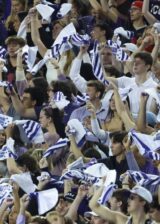
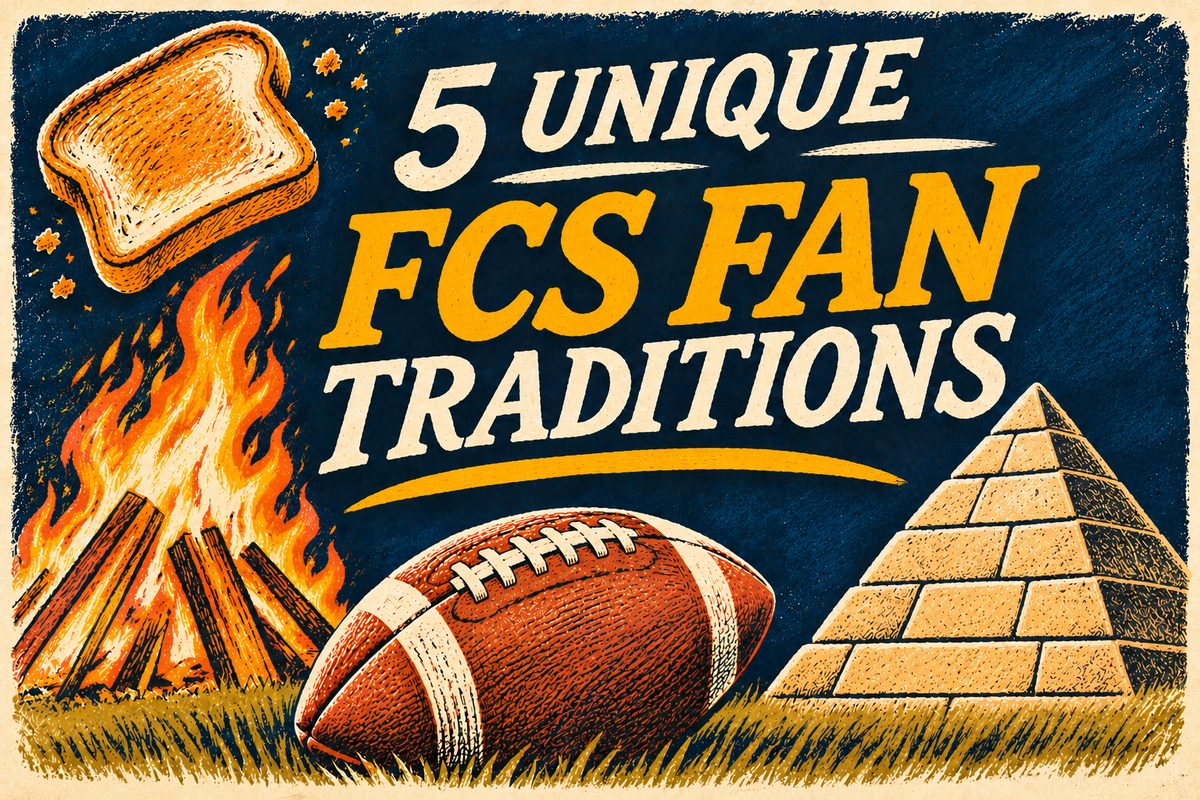
If you’re gluten-free, you might want to stay away from Penn football games. Between the third and fourth quarters at Franklin Field, the band plays “Drink a Highball,” which was originally meant to encourage fans to down their alcoholic beverages at the end of the song. As the legend goes, during the 1970s when alcohol was banned from the stadium, fans decided that instead of drinking, they were going to take things more literally.
When the last line of the song, “Here’s a toast to dear old Penn,” came around, fans started throwing actual slices of toast onto the field. The rest is history.
As you can see, some fans jump the gun and start firing the toast even before the singing begins.
Honestly, the students with laundry baskets and helmets trying to catch the toast might be the best part of the entire tradition. Engineering students also modified Penn’s motorized turf cleaner into a “Toast Zamboni” to help gather the detritus.
Editor's Picks
As with most traditions, there are differing origin stories, but band director Greer Cheeseman claims that he and his friends were the first to bring “a couple loads of toast” to a game after participating in a similar exercise while watching The Rocky Horror Picture Show at a movie theater in the late ’70s. Cheese and toast … a match made in heaven.
South Dakota State – Hobo Day
Let’s get this out of the way first: The name “Hobo Day” has drawn criticism from those who say it makes light of homeless people, but South Dakota State organizers say it honors the traveling hobo of the early 1900s.
OK, on to the fun part.
Beginning in 1907 as a “nightshirt parade” that had students marching down Main Street in nightshirts and bedsheets, Hobo Day emerged in 1912, with students dressing in the traditional traveling worker garb and growing out their beards.
The tradition has stood the test of time, with a parade taking place the morning of the homecoming football game. There’s a different theme each year, and students have varying interpretations of “hobo” as they march from the SDSU campus to downtown Brookings.
According to The College on the Hill, a book by Amy Dunkle and V.J. Smith, Hobo Day was started by one man — student Adam Dutcher, who had seen a similar event at the University of Missouri. Generations of SDSU students owe Dutcher a debt of gratitude for one of the best college traditions in the country.
Dartmouth – Homecoming bonfire
Whoever thought to combine a massive wooden structure engulfed in flames with amateur distance running deserves a medal. On the night before the football team’s annual homecoming game, Dartmouth freshmen run laps around a gigantic bonfire while dodging sabotage attempts by upperclassmen.
Reportedly originated in 1888, the tradition used to require freshmen to run as many laps as the last two digits of their class year, plus 100 — so, if you were in the class of 2005, you’d run 105 laps.
Folks slowly came to their senses over the years, however, and now freshmen just run as many laps as the last two digits of their class year. Don’t be surprised if there’s a steep decline in Dartmouth applications for the class of 2099!
Grambling State and Southern – Battle of the Bands
You knew this one was coming. Arguably the most entertaining tradition in all of sports, the Battle of the Bands takes place at halftime of the Bayou Classic, the annual football game between Grambling State and Southern. It’s a nonstop party, and gained further popularity after the 2002 film Drumline made nearly $60 million worldwide.
“No one knew about drumlines [before the movie],” Drumline producer Wendy Finerman told Andscape. “Now they’re common knowledge.”
It’s rare that people tune in for the halftime show rather than the actual game, but that’s certainly been the case with the annual showdown between Grambling’s Tiger Marching Band and Southern’s Human Jukebox. Occasionally the bands get guest stars to perform with them, most recently GloRilla and Juvenile.
The 53rd Annual Bayou Classic takes place on Saturday, Nov. 28 at the Caesars Superdome in New Orleans.
Southern Illinois – King Tut’s tomb
History meets tradition with Southern Illinois’ unique (and heartwarming) ritual of touching the resting place of King Tut, the original mascot Saluki — an ancient breed of Egyptian hunting dog — whose duties began in 1951. He tragically died in 1954 after being struck by a car, and he was memorialized with a cement pyramid at the corner of McAndrew Stadium.
When Saluki Stadium opened in 2010, King Tut’s pyramid was cleaned up and moved to the entrance, where fans and players now touch it for luck before entering.
King Tut was clearly a good boy for his legacy to last this long, and Southern Illinois fans get to feel a piece of Southern Illinois history every time they enter the stadium.