
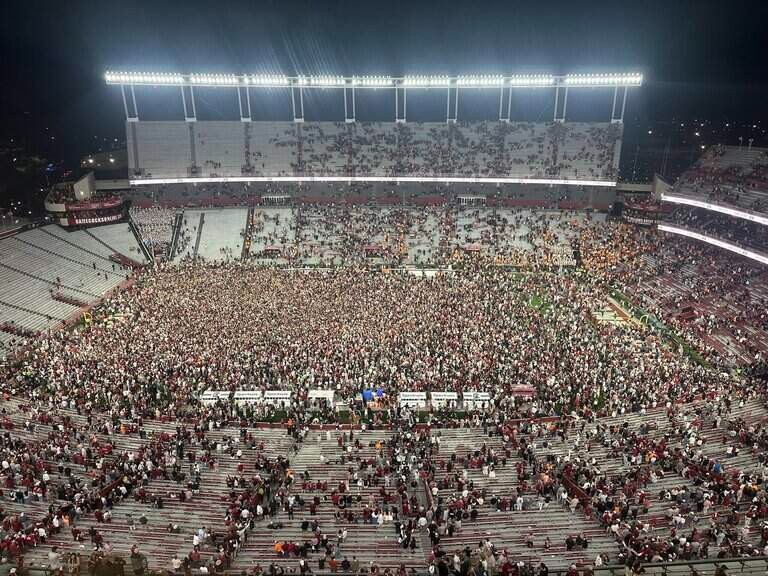
The Southeastern Conference has made its stance on field storming clear, but after South Carolina became the latest school hit with a $500,000 fine for celebrating a signature victory, it’s fair to ask whether the punishment fits the offense.
The Gamecocks, who beat then-No. 11 Tennessee 27-24, were among several college football teams whose fans rushed the field Saturday, joining Minnesota, UCF and Cincinnati. Appalachian State fans also stormed the field Friday night following an overtime upset of James Madison.
Notably, it’s the third time the SEC has issued a $500,000 fine this season, with South Carolina joining Tennessee (after beating Alabama) and Kentucky (after beating LSU).
The conference adopted a flat $500,000 penalty for field-storming violations before the 2025 season, replacing a system of escalating fines.
The SEC’s policy states that schools must “limit access to competition areas” for “the safety of participants and spectators alike.”
It allows institutions to establish procedures permitting fans to celebrate on the playing surface, but only after visiting-team personnel and game officials have safely exited.
Otherwise, schools risk a fine.
The SEC has a clear responsibility to hold schools accountable for crowd safety. A rush of thousands of fans can create dangerous situations for players, coaches, officials and spectators.
The potential for injuries or confrontations is real. Significant fines also give athletic departments a financial incentive to develop better crowd-control plans.
But does a $500,000 penalty accomplish that goal, particularly when multiple schools face similar situations?
“I used to think it was awesome. I did. I thought it was a cool thing about college football,” LSU coach Lane Kiffin said, before adding: “Everybody’s got the phones and they all want their moment.”
Kiffin’s comments speak to a growing concern around field storming: What was once a spontaneous celebration can become an opportunity for fans to get close to players and coaches, sometimes creating potentially dangerous confrontations.
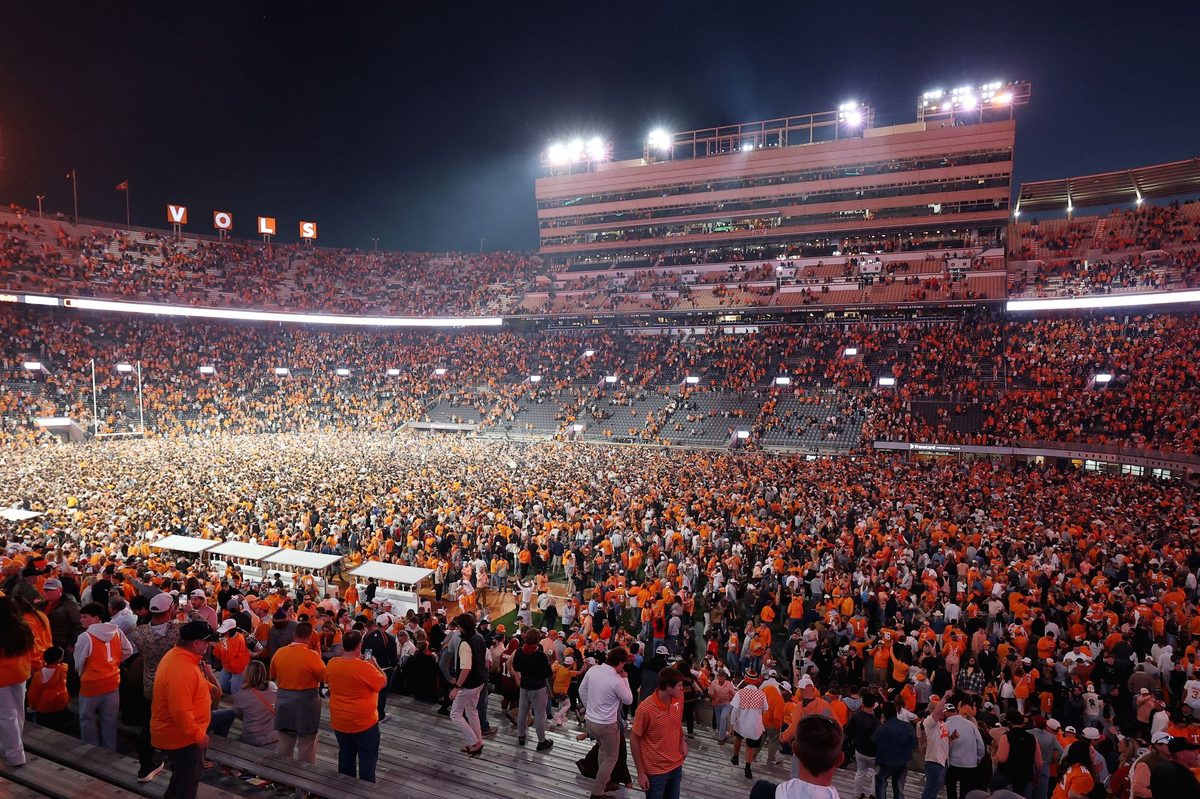
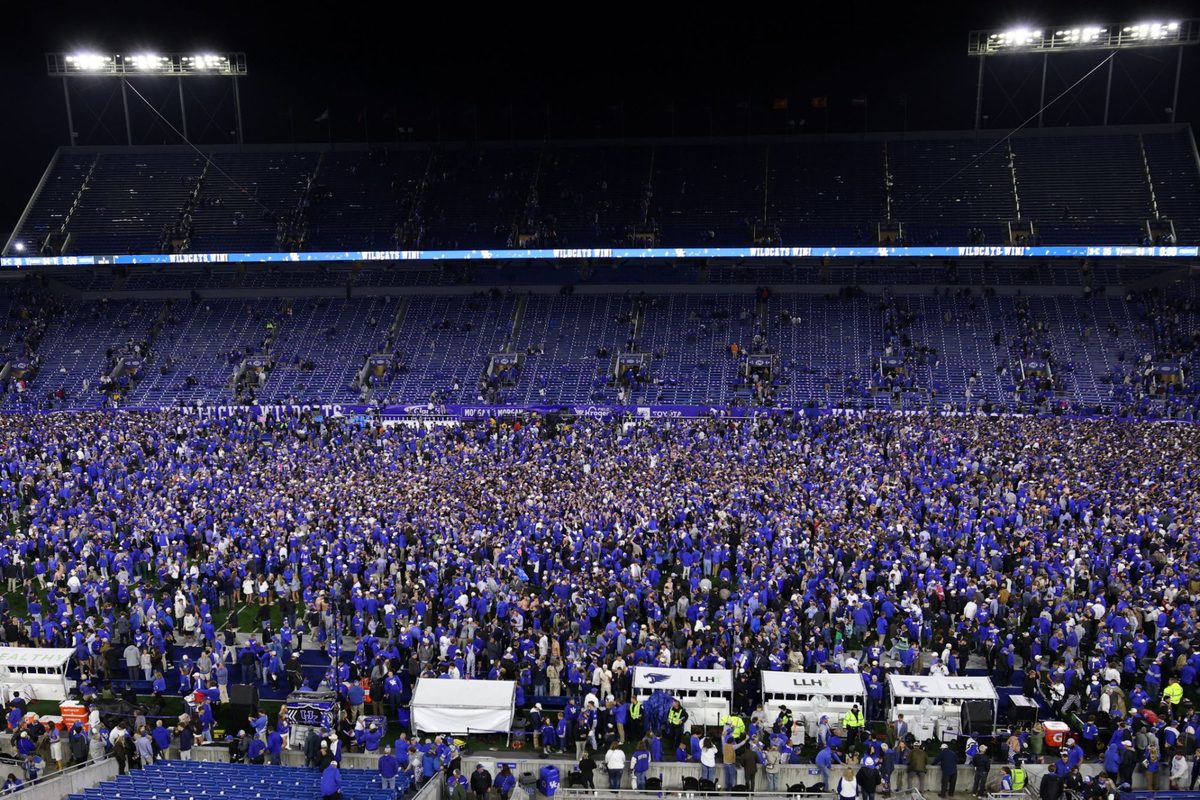
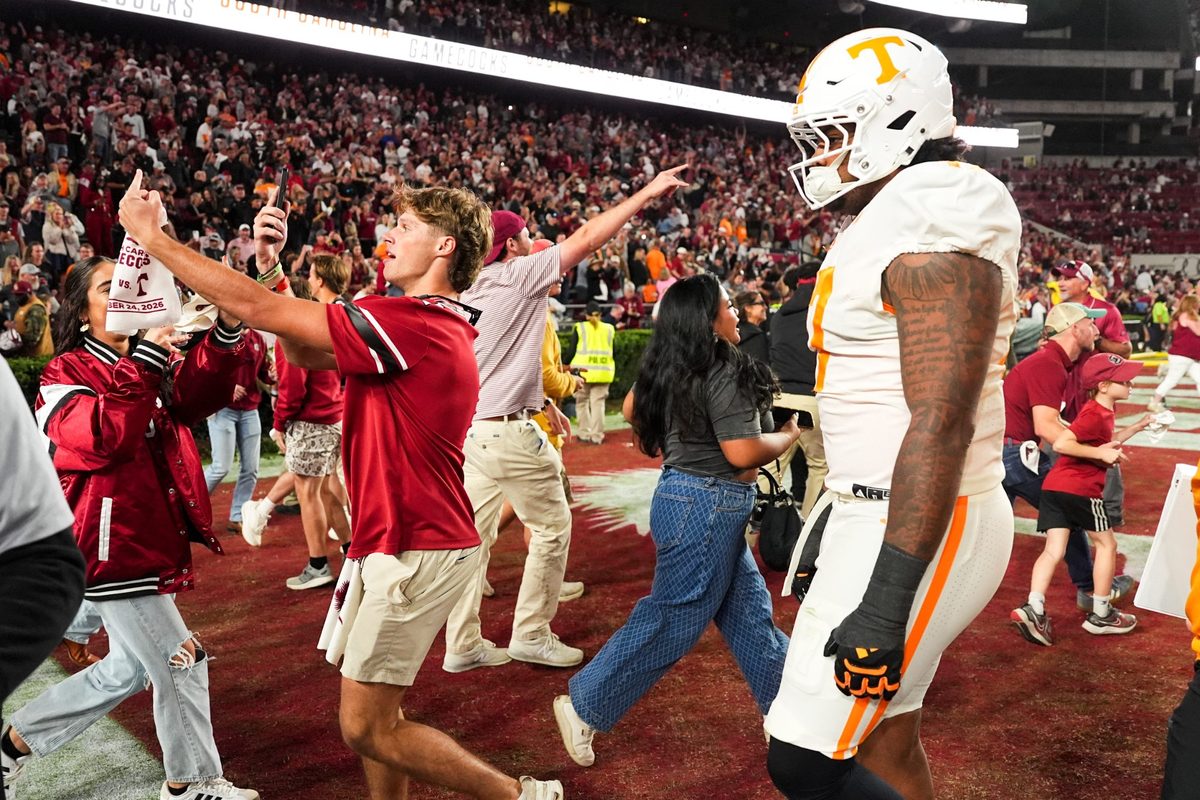
South Carolina does have a potential path to a reduced penalty. SEC Commissioner Greg Sankey could lower the fine to $100,000 if the school demonstrates that it made a full attempt to prevent the field rush and that interaction with the visiting team was minimal.
That provision gives the conference some flexibility to consider the circumstances rather than treating every incident identically.
Tennessee’s back-to-back fines illustrate the challenge.
The Volunteers paid $500,000 after beating Alabama on Oct. 17, with that money going to the Crimson Tide under SEC policy.
A week later, Tennessee was on the receiving end after South Carolina fans stormed the field, earning the Volunteers the same $500,000 they had just paid Alabama.
The financial penalty may be significant for an athletic department, but does it do enough to change behavior?
A tiered penalty system could offer a better approach. Schools that make a genuine effort to prevent a field rush could face a lower fine, while those that fail to implement adequate security measures or allow dangerous interactions could face stiffer penalties.
The SEC could also require schools to strengthen their crowd-control plans after violations.
Such a system wouldn’t excuse field storming or diminish the conference’s responsibility to protect players, coaches, officials and fans. It would give the SEC a way to account for the circumstances of each incident while maintaining meaningful consequences.
Field storming remains one of college football’s most memorable traditions, particularly after a dramatic upset. The SEC doesn’t have to ignore the risks to recognize that reality.
The question isn’t whether South Carolina, Tennessee and Kentucky should be held accountable.
It’s whether the SEC’s approach is the most effective way to improve safety, or whether a more flexible system could do the job better.
READ MORE: College Football Petty Rankings: The best social media posts from Week 8
Every campus. Every tradition. Every fan. Sign up for the Student Section Newsletter
Mike Garbett is a content specialist working with McClatchy’s Content Innovation Lab.