
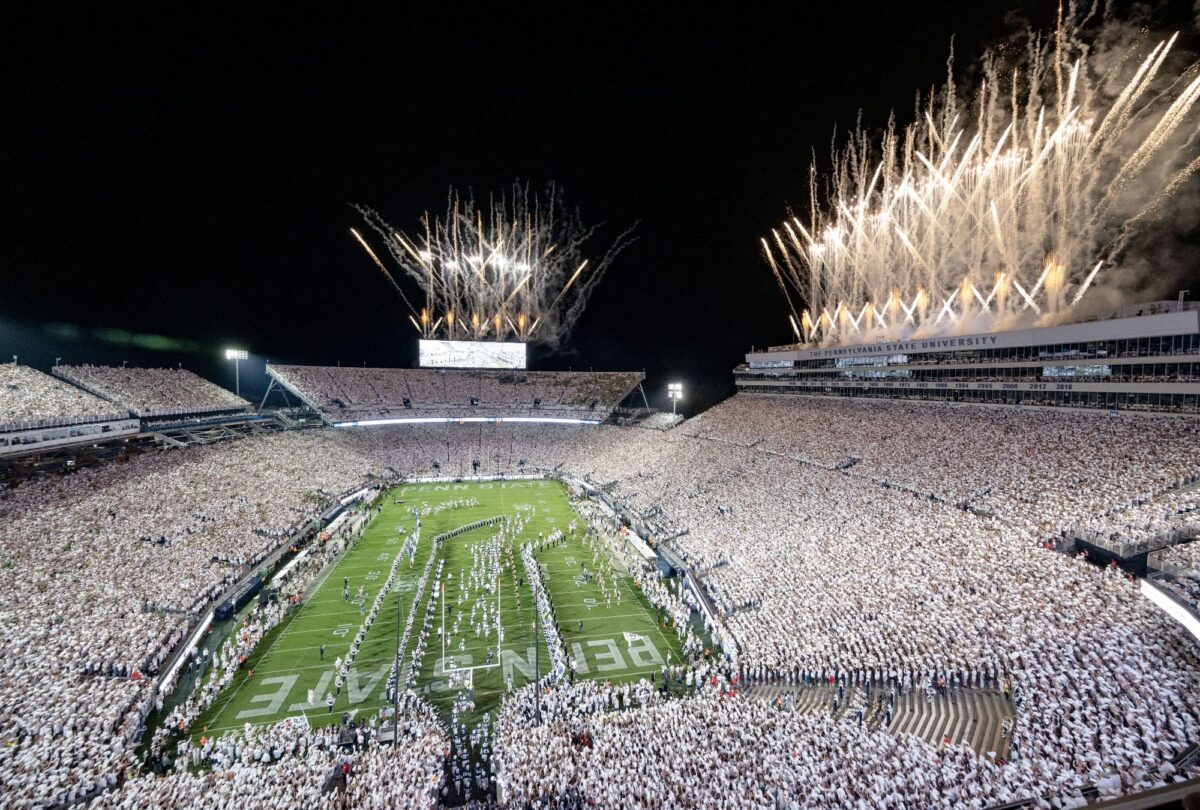
Penn State’s annual White Out game, widely considered one of college football’s most intimidating spectacles, returns Saturday (7:30 p.m. ET/NBC) when 19th-ranked USC visits Beaver Stadium for a nationally televised Big Ten matchup.
What began as a student section tradition has evolved into one of the sport’s premier spectacles, drawing national attention for its scale, energy and unmistakable atmosphere.
FULL STORY: Penn State’s White Out: From simple idea to college football’s most famous sea of white
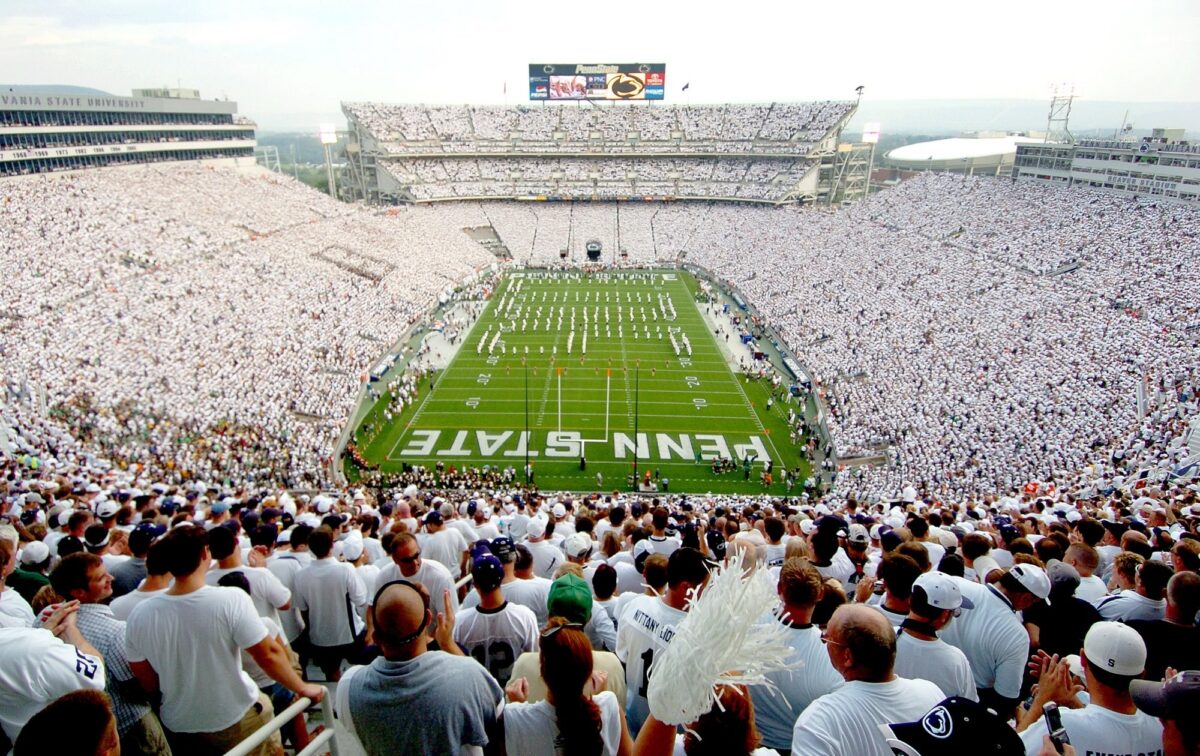
Here’s a quick primer on how the sea-of-white tradition started and what makes it a signature night in Happy Valley:
- The game: Penn State is holding its 19th full-stadium White Out; the Nittany Lions enter Saturday’s matchup 11-7 in such games but have dropped two in a row, including a 30-24 double-overtime loss to Oregon in 2025.
- The origin: Guido D’Elia, then the athletic department’s branding director, launched a grassroots campaign in 2004 asking the student section to wear plain white T-shirts for a game against Purdue. Penn State lost that day, but the visual template stuck.
- Going stadium-wide: In 2007, Penn State expanded the White Out beyond the student section to the full stadium. The first all-white crowd of 110,078 watched the Nittany Lions rout Notre Dame 31-10.
- The opponents: USC marks the 12th different opponent that Penn State has hosted for a White Out game, joining Ohio State, Michigan, Notre Dame, Illinois, Iowa, Alabama, Auburn, Minnesota, Washington, SMU and Oregon. Michigan has been the opponent the most times (six) when counting full-stadium and student section-only games.
- Biggest crowd: The 2025 White Out against Oregon drew 111,015 fans — the largest White Out attendance in Penn State history.
READ MORE: Ultimate road trip for Big Ten football fans: Five stadiums, 5 cities, 5 weekends
READ MORE: 5 things every Penn State football fan needs to experience at least once
READ MORE: USC’s 6 No. 1 overall NFL draft picks define college football greatness
Mike Garbett is a content specialist working with McClatchy’s Content Innovation Lab.
This report was produced with the assistance of a proprietary tool powered by artificial intelligence and using our own originally reported, written and published content. It was reviewed and edited by our journalists.